

Newborn Screening Follow-Up
Since 2013, The Community Health Clinic (CHC) has served as a follow-up specialist clinic for the Indiana Newborn Screening program. The CHC currently provides coordinated care for any infant born within 21 counties of Indiana with an abnormal screen for:
Inborn Errors of Metabolism (IEMs)
Maple Syrup Urine Disease (MSUD)
Tyrosinemia (TYR)
PAH Deficiency / Phenylketonuria (PKU)
Organic Acidemias
Galactosemia
Fatty Acid Oxidation Disorders
Severe Combined Immunodeficiency (SCID)
X-linked Adrenoleukodystrophy (X-ALD)
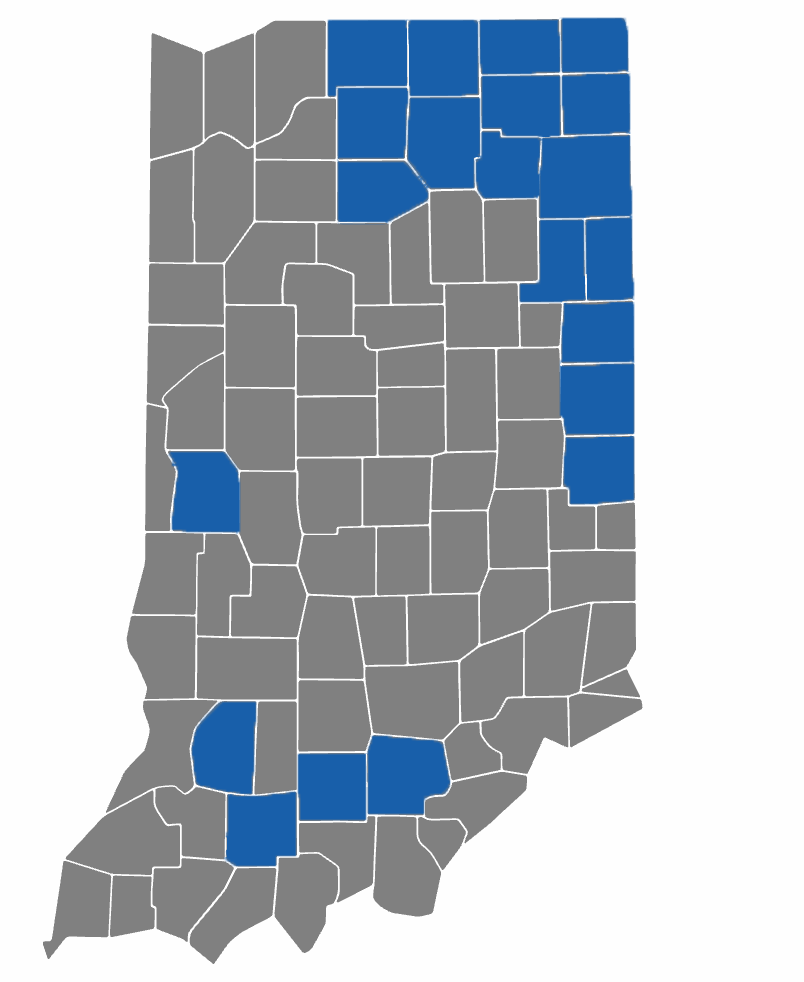
The CHC provides Newborn Screening Follow-Up for the above conditions in the following Indiana counties: Adams, Allen, Daviess, Dekalb, Dubois, Elkhart, Fulton, Jay, Kosciusko, LaGrange, Marshall, Noble, Orange, Parke, Randolph, St. Joseph, Steuben, Washington, Wayne, Wells, and Whitley. The CHC’s Miracle Dots program provides long-term care for any newborn with a confirmed diagnosis.
The Miracle Dots team is committed to providing rapid and affordable follow-up.
We also work to educate families and midwives in the area on the importance of newborn screening with the goal that every infant receive a newborn screen. Babies who receive an early diagnosis may live better, healthier lives.
Miracle Dots (Das KIND)
We provide follow-up services through the Das KIND (Knowledge & Intervention through Newborn Diagnosis) Program. Das KIND in German means ‘the child.’ The services provided through Das KIND include:
Rapid and direct contact from the CHC to the family upon receiving a positive screen
Education for the family and access to a 24/7 call service throughout the confirmatory testing process and after a diagnosis is made.
Care coordination to provide families with the most valuable and appropriate resources including financial assistance, scheduling tests & appointments, and logistics.

What is Newborn Screening?
-
These tests could save your baby’s life.
While most babies are born healthy, some babies are born with serious, but treatable medical conditions. The conditions found through newborn screening can be present in any family, even those without a family history of them.
Newborn screening helps identify babies who may be at risk of having serious health issues.
Learning if your baby is at risk for one of these conditions can help you prevent more serious medical problems from happening.
-
Medical tests tend to fall into two categories: screening and diagnostic testing. These can be confusing terms.
Screening Test: A screening test helps recognize if your baby might have a health condition before there may be symptoms so that treatment can start early. Examples: Cholesterol screening, blood pressure test, mammography screening, vision test, and newborn screening.
Diagnostic Test: A diagnostic test helps confirm or rule out a medical condition in an individual with concerning symptoms or screen results.
-
There are three parts to Newborn Screening: The Blood Test, Pulse Ox, and Hearing Test.
Blood Test
Around 24-48 hours after your baby’s birth, a nurse, midwife, or other trained member of the medical staff will fill out a newborn screening card. This card often includes your baby’s information (name, sex, weight, date/time of birth, date/time of first feeding). It may also include your contact information as well as your baby’s doctor information.
A small blood sample is taken from your baby’s heel. These drops of blood are placed on the filter paper of the newborn screening card. The blood test is sometimes called “the heel stick” “heel poke” “24-hour test” or “PKU test”.
This card is then mailed to a state laboratory for screening.
Pulse Ox (CCHD)
Pulse oximetry, or pulse ox, is a test that measures the amount of oxygen in your baby’s blood and can detect some heart problems called Critical Congenital Heart Disease (CCHD). The test is done using a machine called a pulse oximeter, which uses a small sensor placed on your baby’s skin. This does not hurt your baby.
The pulse ox test only takes a couple of minutes and is usually done after the baby is 24 hours old and before he or she leaves the hospital.
You will find out your baby’s results after the test is done. If your baby does not pass, your baby’s doctor will recommend more tests.
Hearing
The third part of newborn screening looks for problems with your baby’s hearing. Newborn hearing screens are quick, safe and can be done while your baby is asleep!
Two different tests can be used to screen for hearing loss in babies.
Your baby may have either or both depending on where they are born.
You will find out your baby’s results after the test is done. If your baby does not pass, your baby’s doctor will perform additional tests
-
All three parts of newborn screening are done soon after the birth of your baby (usually after 24 hours), and in most cases, while you are still in the hospital.
Timing is important. For the blood test, certain conditions may not be detected if your baby’s blood sample is taken before 24 hours of age. Taking after 48 hours of age may cause life threatening delays.
Some states require babies to undergo a second newborn screen by the baby’s doctor when they are two weeks old. It is important to complete this testing if you live in one of these states.
If you deliver your baby in a hospital, screening will happen before you take your baby home. If you do not deliver your baby in a hospital, making a plan with your birth provider before you deliver will help you make sure your baby has screening at the right time.
-
Every state requires newborn screening. Each state is different and decides which conditions will be included in their screening based on the recommended list provided by the United States Secretary of Health and Human Services.
Most states screen for at least 30 of the 35 current core conditions recommended by the United States Secretary of Health and Human Services.
Want to know which conditions are included in your state? You can learn more at Baby’s First Test and the Newborn Screening Information Center.
-
Results are usually complete within 2 weeks after birth. It is important to make sure your baby’s doctor or midwife has your best contact information so they can reach you if there is abnormal, or out-of-range result.
Normal (in-range or screen negative) What it means: Your baby’s blood test did not show any signs of the conditions included on the newborn screening panel.
Abnormal (out-of-range or screen positive) Your baby’s screening did show signs that your baby may have one or more of the conditions included on the newborn screening panel, and follow-up testing must be performed quickly to determine if a condition is actually present.
You have the right to see your baby's newborn screening results. If you would like to get information about your baby’s newborn screening results, talk to your baby’s doctor.
-
Don’t panic, but act quickly. It is okay to be scared. But it is important to remember that an abnormal, or out-of-range result, does not mean that your baby has a condition . In fact, some babies with abnormal newborn screens have follow-up test results within the normal range.
Follow up with your baby’s doctor. Don’t delay! If your baby has an abnormal, or out-of-range result, it is very important to follow your baby’s doctor or state public health program’s instructions quickly and carefully.
Complete confirmatory testing. Since newborn screening does not confirm if your baby has a condition, it is very important to complete any additional tests that are recommended. This will help you find out if the condition is truly present. Talk to your baby’s doctor or state public health program about next steps.
Meet the Miracle Dots Team
-
![]()
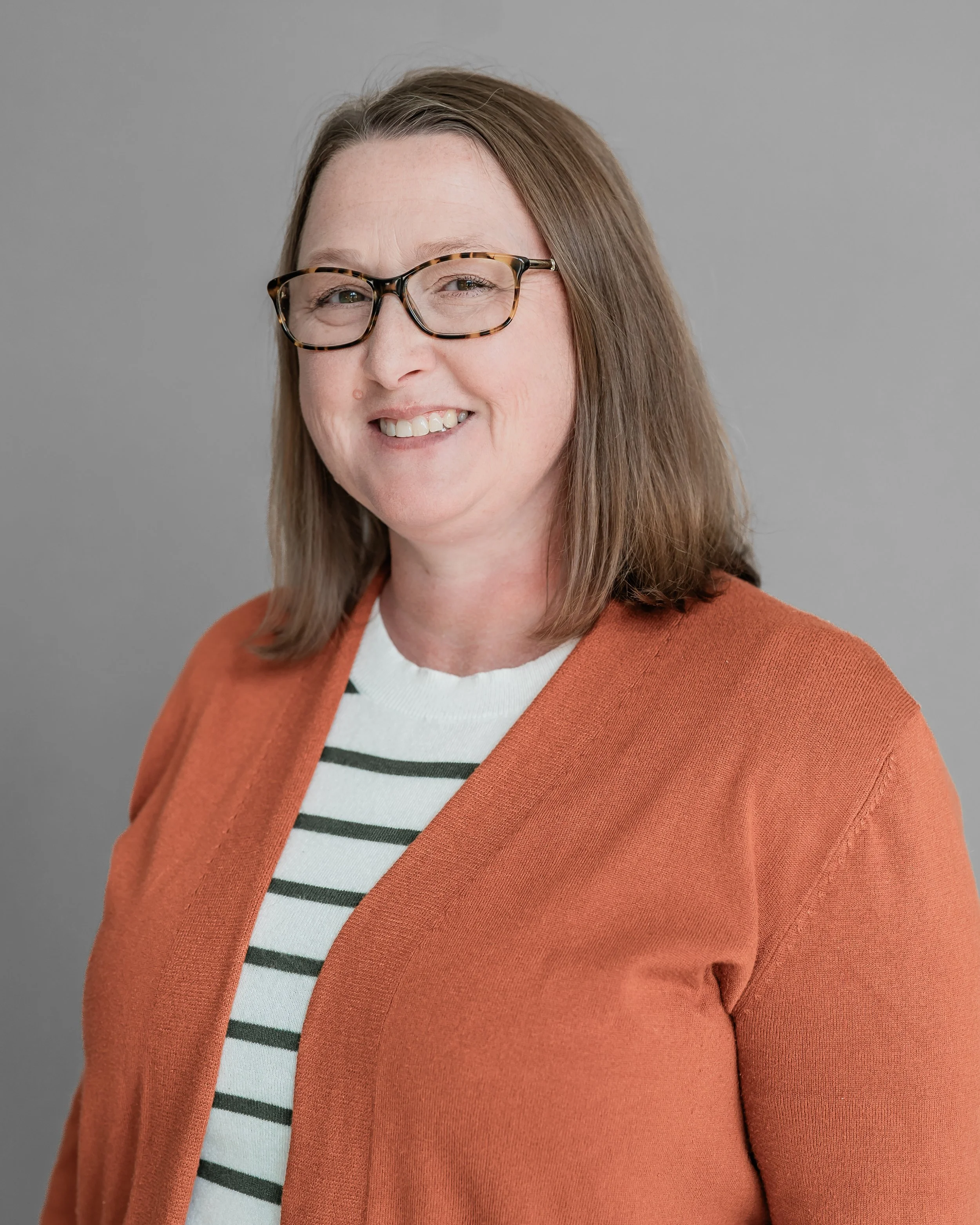
Jody Werker, RN
NEWBORN SCREENING MANAGER
-
![]()
Fannie Lord, BSN, RN
NEWBORN SCREENING COORDINATOR
-
![]()
Dr. Zineb Ammous, MD, FACMG
MEDICAL BIOCHEMICAL GENETICIST
-
![]()
Dr. Kiri E. Sunde, MD
PEDIATRICIAN & MEDICAL BIOCHEMICAL GENETICIST
-
![]()
Laura Iberkleid, MPH, RD, LD
REGISTERED DIETITIAN
-
![]()
Marissa Testa, MS, RDN, CSP, LD
REGISTERED DIETITIAN
-
![]()
Pam Deetz, MA
CASE MANAGEMENT COORDINATOR
-
![Cortney Crocker Headshot]()
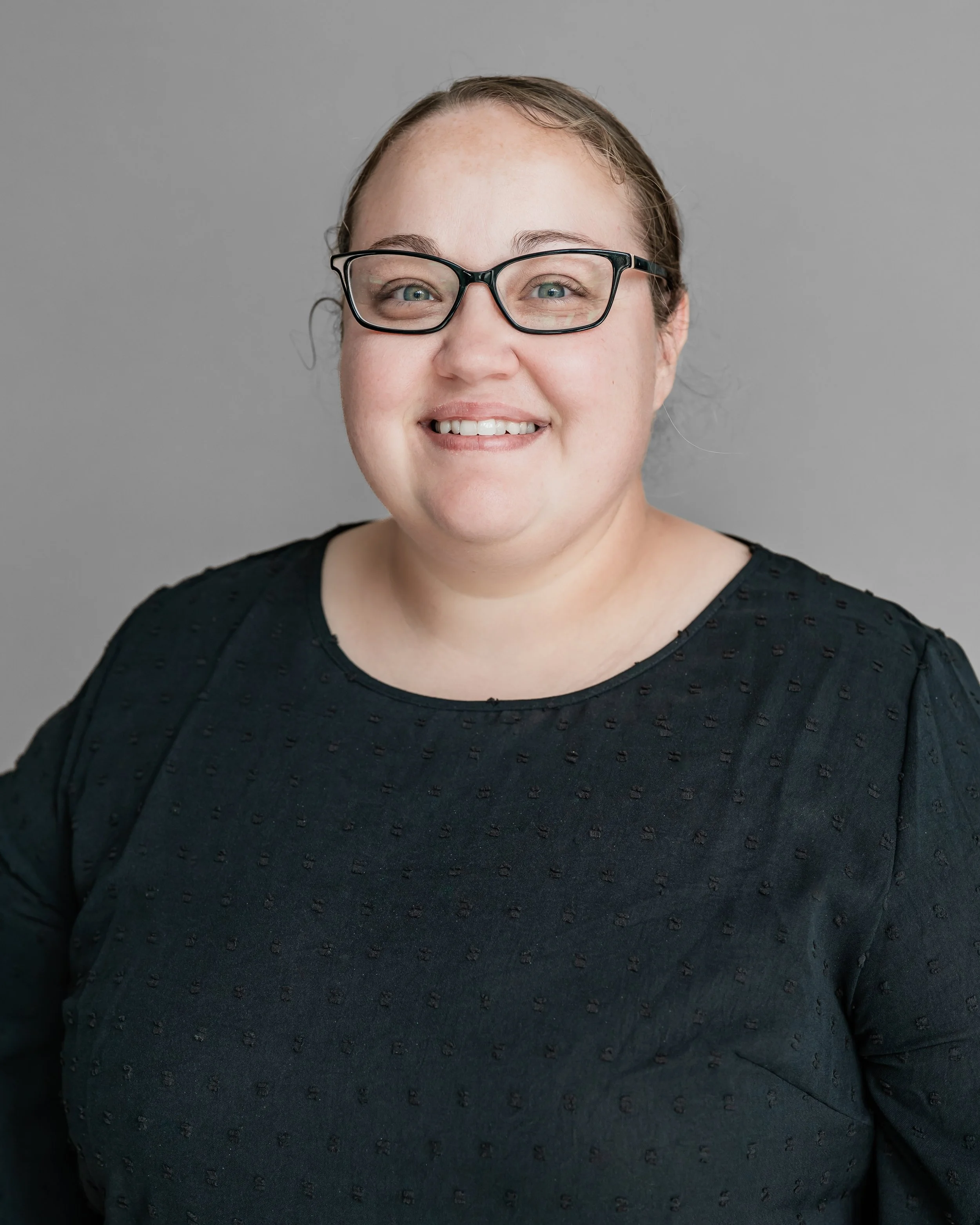
Cortney Crocker, MA
CARE COORDINATOR

Miracle Dots Resources
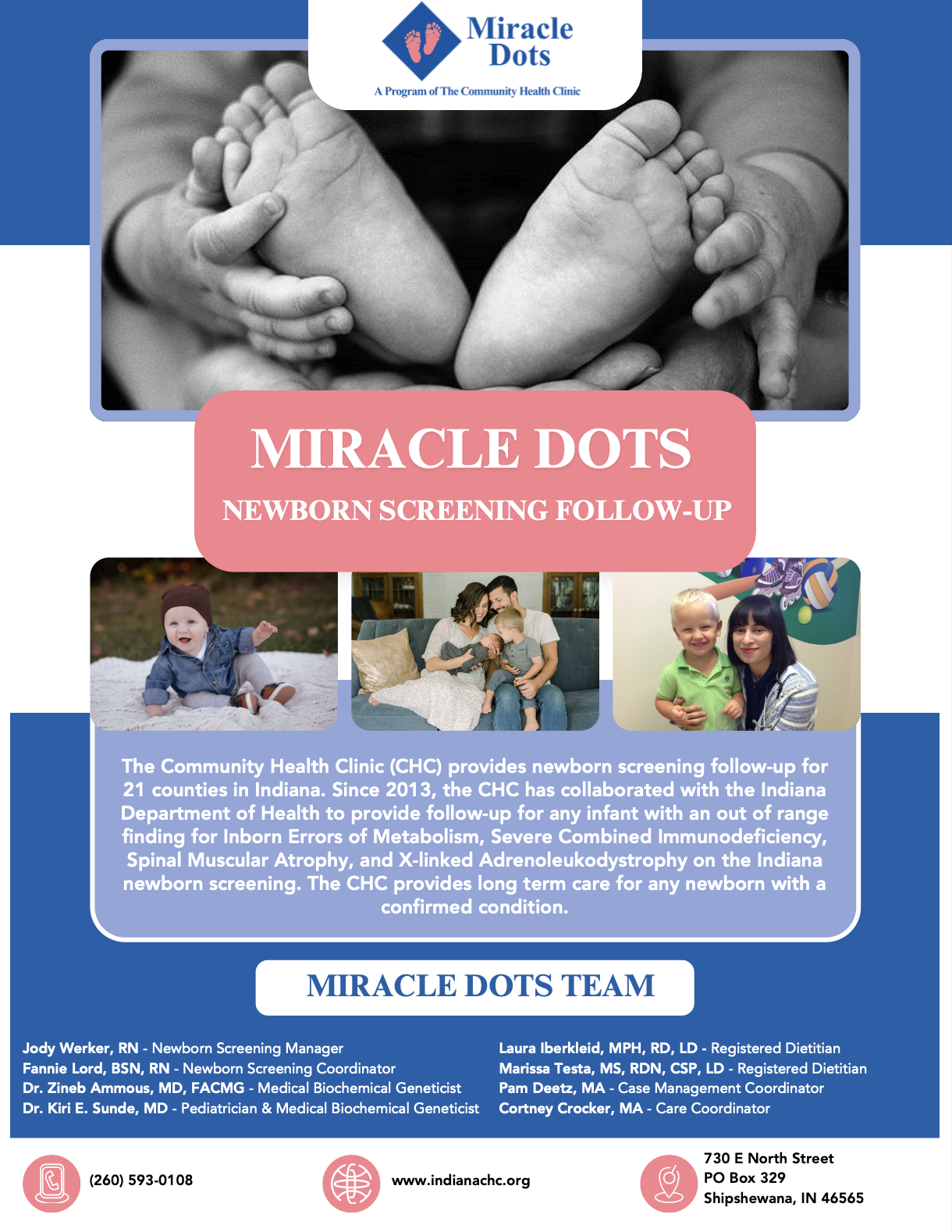
Miracle Dots Flyer
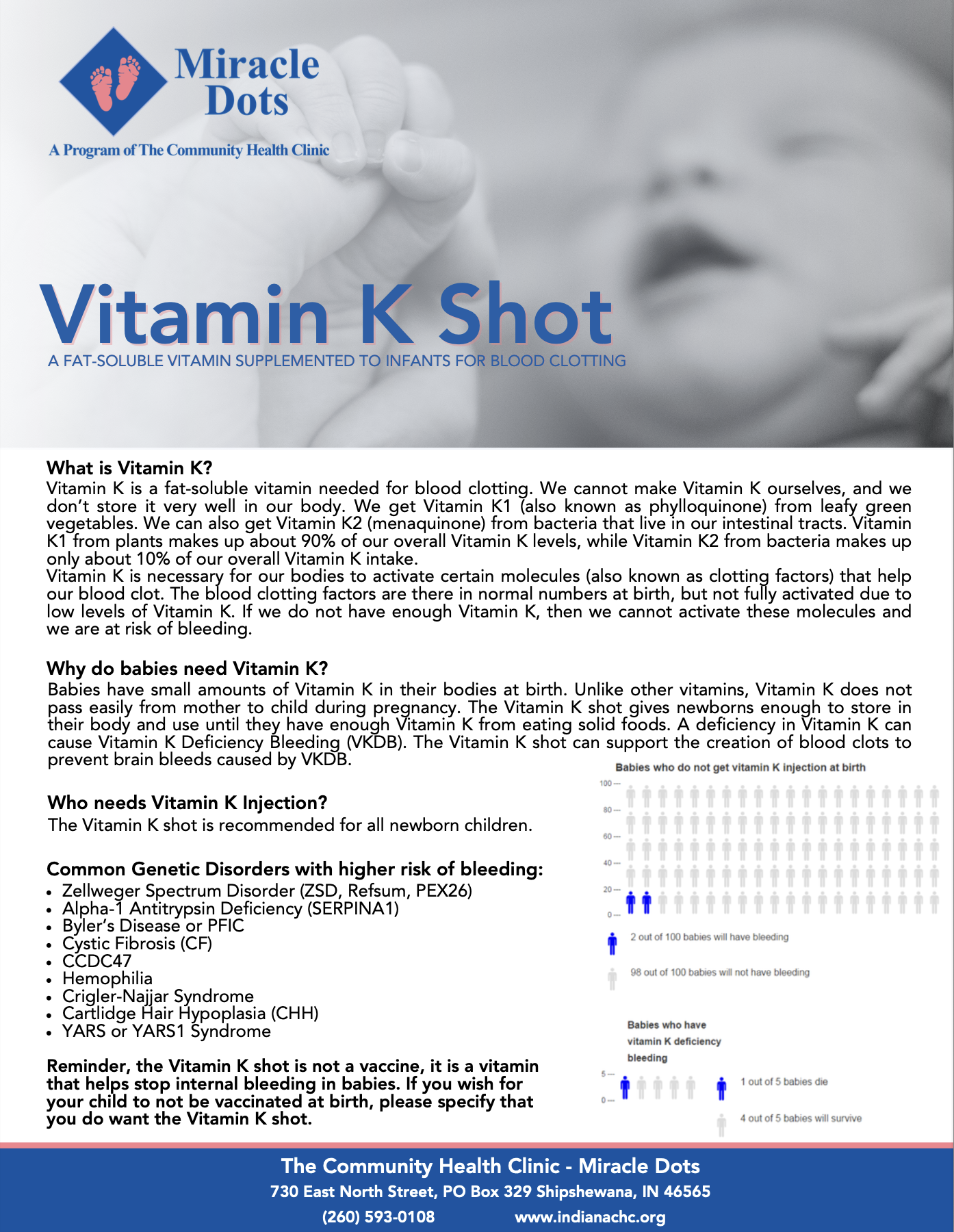
Vitamin K Shot Info Sheet
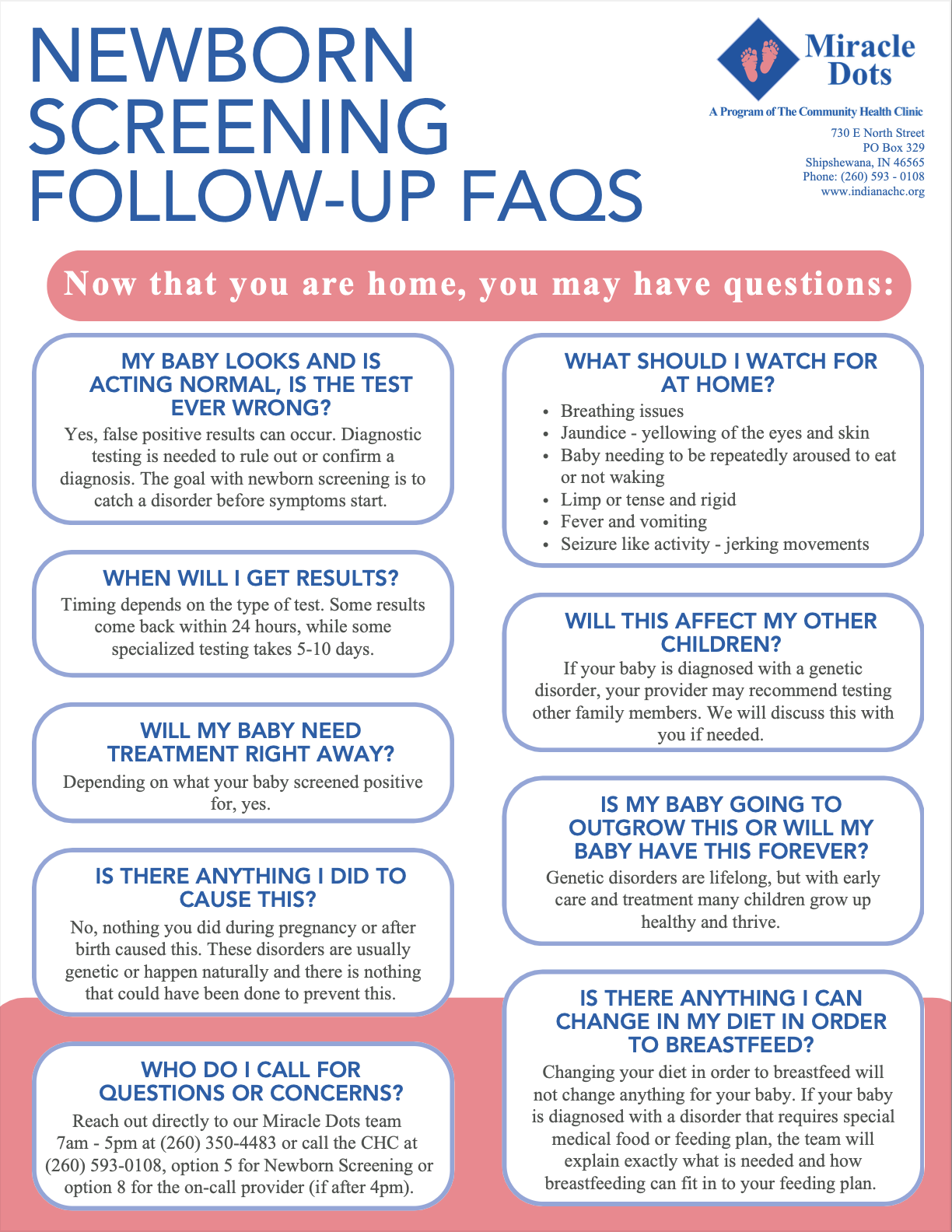
Newborn Screening FAQs
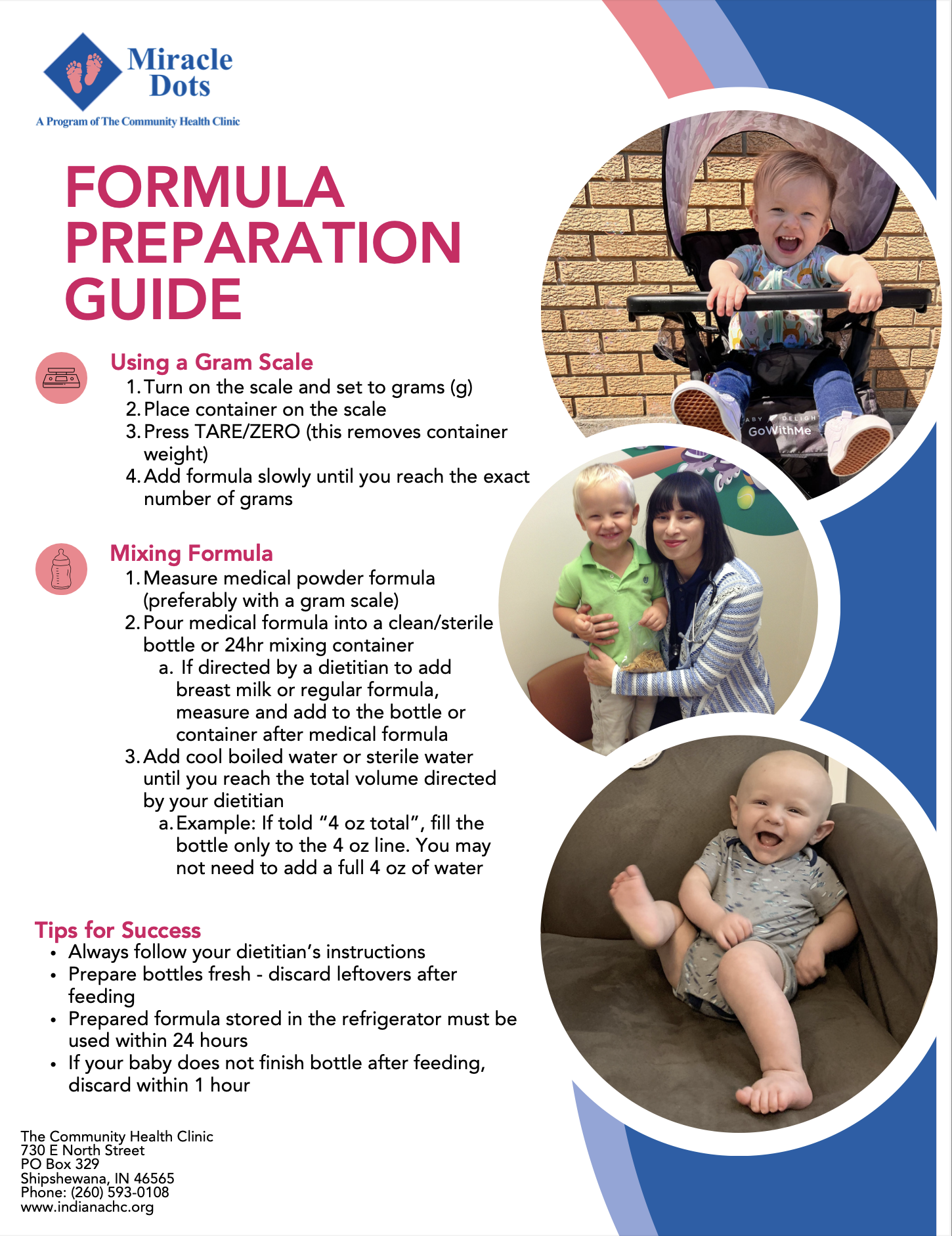
Formula Preparation Guide
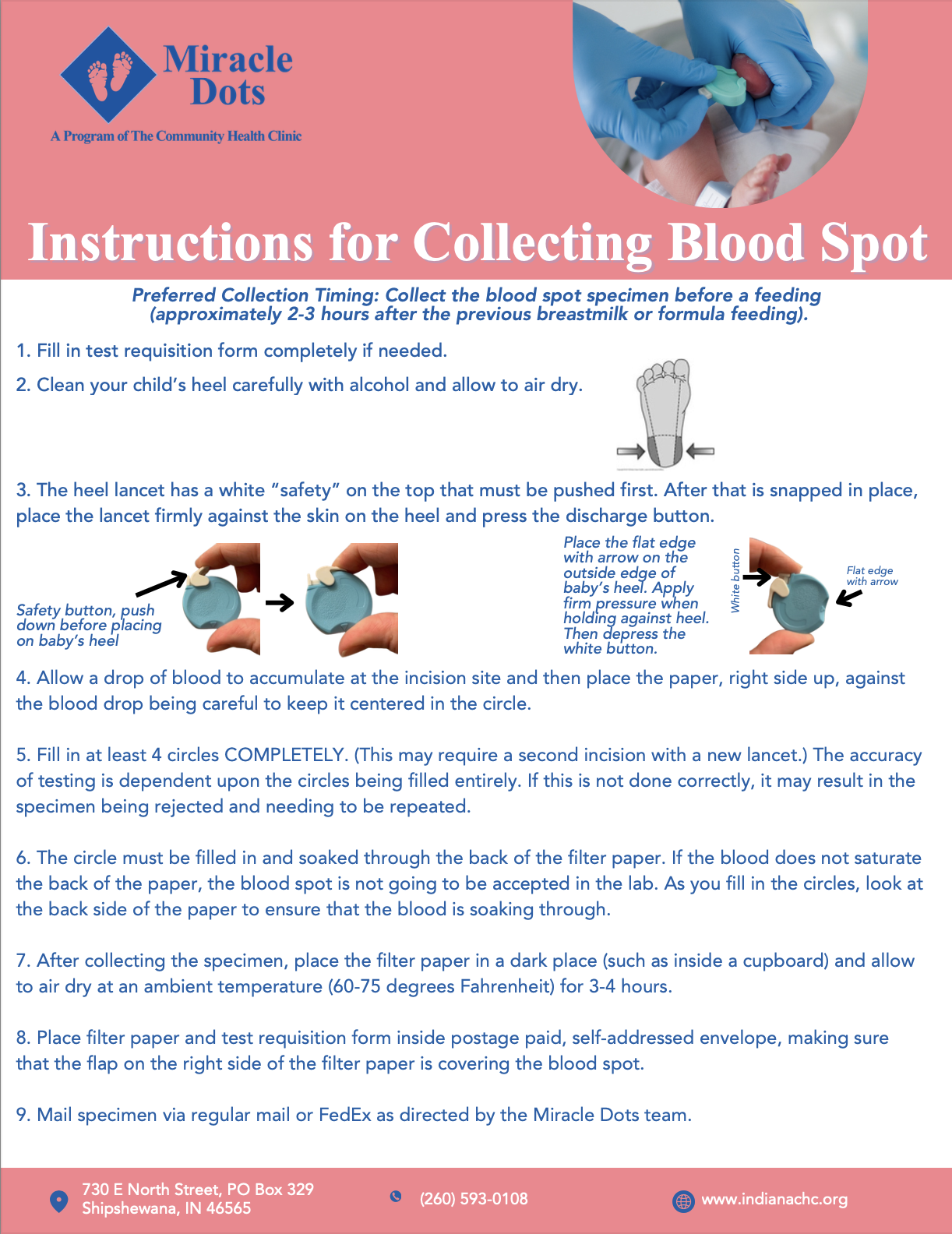
Instructions for Collecting Blood Spot
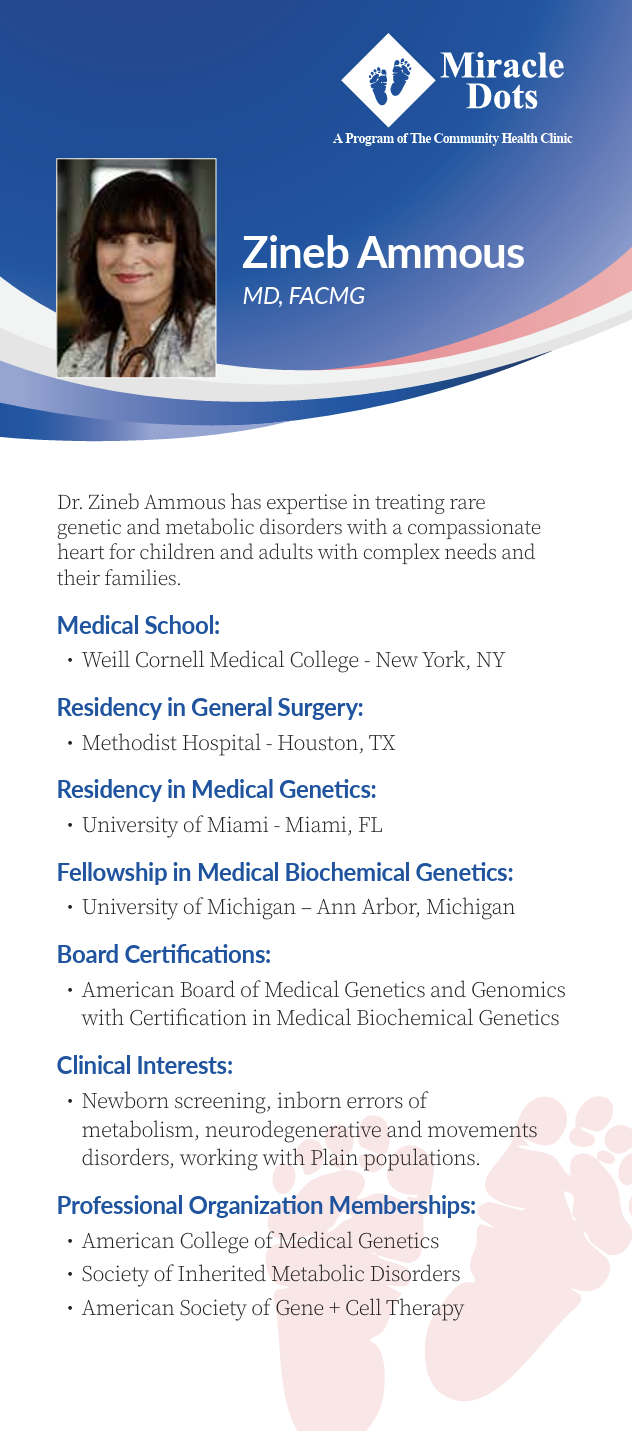
Miracle Dots Provider Card

Help sustain hope for future generations
Your support will help sustain the Clinic’s mission, ensuring every patient continues to receive compassionate care, and each 1 in 21 person with a rare genetic disorder has a chance for a brighter future.